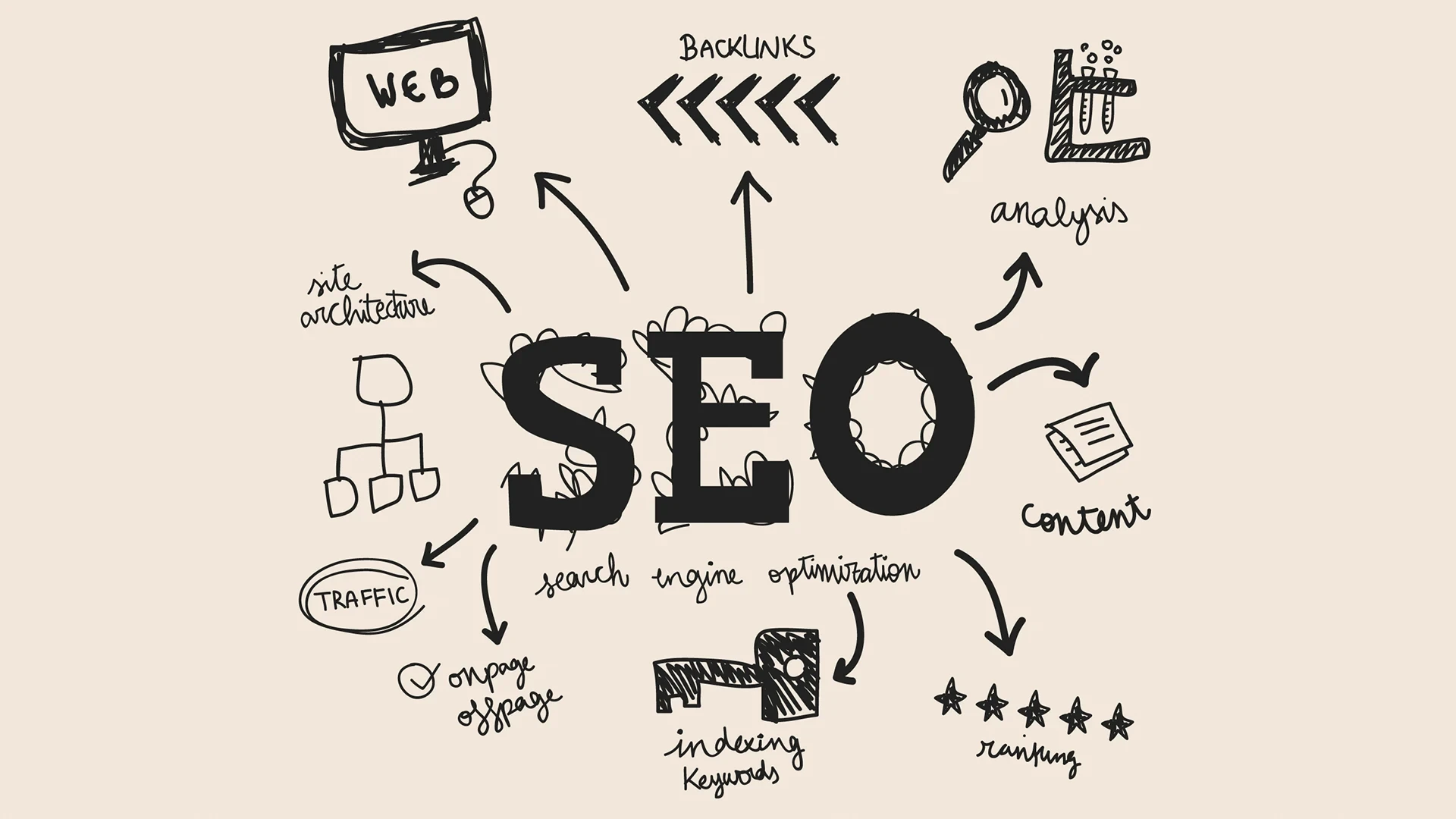
SEO - What is it and why does it determine the fate of your site?
Imagine you’ve built a beautiful shop — with a stunning storefront, a carefully curated selection — but on the most dead-end street in the city. Who’s going to come? SEO is exactly the path that brings your business to the “main avenue” — Google’s first page — and connects you with the right people.
What is SEO?
SEO (Search Engine Optimization) is a combination of technical, content-driven, and strategic measures that help a website rank as high as possible in the organic results of Google, Bing, and other search engines.
Simply put: when someone searches for “best coffee shop in Tbilisi,” Google makes an instant decision — which site appears first, second, tenth? SEO is the process that determines that decision.
It’s important to remember: Google’s first page has 10 spots. Research shows that approximately 75% of searchers never go to the second page. That means failing to appear on the first page is, practically speaking, the same as being invisible.
The Three Pillars of SEO
Everything you do within the site — content, headings, meta descriptions, keywords, structure, and visual layout.
Links pointing to your site from other websites (backlinks), brand mentions across the internet, the influence of social media, and building authority.
Site loading speed, mobile device compatibility, HTTPS security, proper URL structure — the infrastructure that Google’s “bots” encounter.
How Does Google Evaluate?
Google’s automated programs — (crawlers) — constantly browse the internet, read pages, and determine where to place each page in results based on over 200 signals. The most influential factors are:
- Content quality and depth (E-E-A-T)
- Google evaluates Experience, Expertise, Authoritativeness, and Trustworthiness.
- Core Web Vitals — Since 2021, Google officially considers three technical metrics: LCP (loading speed), INP (interactivity), and CLS (visual stability).
- Backlinks — authoritative links. When a trusted, authoritative site links to your page, Google treats it as a “vote.” Quality matters, not quantity — 5 strong backlinks beat 500 weak ones.
- Mobile-first indexing — Since 2023, Google indexes sites based solely on their mobile version. More than 60% of internet traffic comes from smartphones — mobile optimization is mandatory.
- User behavior (User Signals) — Click-through rate (CTR), time spent on site, and bounce rate — these signals tell Google: “Is this page useful to visitors, or not?”
Keywords
The heart of SEO is keyword research — understand what words your target audience uses, and align your content with those searches. Three main types:
“shoes” — high traffic, but competition is very high. For a new site — practically out of reach.
“red sports shoes for women” — less traffic, but higher conversion — the user knows exactly what they want.
“shoe store in Tbilisi” — gold for local businesses. Appearing on Google Maps often outperforms web results.
Useful free tools for keyword research: Google Keyword Planner, Ubersuggest, AnswerThePublic. Paid, professional tools: Ahrefs, SEMrush, Moz.
SEO vs Paid Ads — The Fundamental Difference
Many businesses choose Google Ads for fast results — and that’s understandable. However, the two strategies solve different problems:
| SEO (Organic) | Google Ads (Paid) | |
|---|---|---|
| Cost | Time + effort (primarily) | Direct monetary spend |
| First results | 3–12 months | Immediately upon launch |
| Durability | Long-term — an “investment” | Budget runs out — everything stops |
| User trust | High — no “Ad” label visible | Lower — visible “Ad” tag |
| Best use | Brand building, long-term traffic | Campaigns, quick sales |
A strategically minded business combines both: uses Ads for short-term results while SEO “kicks in.”
Content — The Heart of SEO
A popular saying among SEO experts is: “Content is king.” That’s still true today — but it carries more weight now. Google’s recent updates (Helpful Content Update) serve one goal: low-quality, AI-generated, or “keyword stuffed” content simply won’t work anymore.
Good SEO content answers three questions at once: What information is the user looking for? Why are they looking for it? What do they need for that search to be fully satisfied? An article that answers these three questions will naturally win — keywords and all.
Practical Steps — Where Do I Start?
- Register with Google Search Console
It’s a completely free tool — Google will tell you which keywords you rank for, how many visits each page gets, and where technical errors exist. - Give every page a unique Title Tag and Meta Description
Title — 50–60 characters, include the main keyword. Meta Description — 150–160 characters, short and compelling. - Write substantive, useful articles
1,000–2,000-word, structured articles are valuable in Google’s “eyes.” Use H1, H2, H3 headings correctly. - Give your images alt-text
Google can’t “see” images — alt text helps it understand what the image depicts. - Internal Linking
Link your articles to each other. This keeps visitors on the site, guides Google crawlers deeper, and increases the “authority” of your pages. - Improve your site speed
Check your speed with Google PageSpeed Insights. Use WebP format for images — combined with browser caching and a CDN, these are among the most effective steps you can take.
AI and SEO — A New Reality
The widespread rise of AI in 2024–2025 has brought serious changes to the SEO landscape. Google increasingly displays answers directly at the top of search results (AI Overviews) — meaning a visitor may never reach your site at all.
This means the future of SEO will depend more and more on brand authority and content uniqueness. Information that AI can easily reproduce loses its value. Conversely — personal experience, exclusive data, and deep analysis are becoming ever more important.
Conclusion
SEO is not a sprint — it’s a marathon — and that’s a strength, not a weakness. Paid advertising disappears the moment you stop paying. SEO, when done right, builds a digital foundation that works for you for years to come. Start with small steps, measure results, adapt — and long-term growth will be inevitable.